Marcel Bolomet
-
Selected Works
-
Biography
Biography
Switzerland - USA , 2003
MARCEL BOLOMET, né Bolomey (14 November 1905 in Carouge, Switzerland – 13 April 2003 in Hawaii), was a Swiss photographer who photographed many of the pivotal events during the 1930s and 1940s.
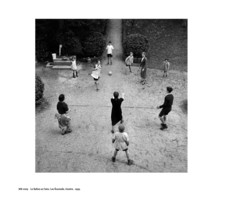
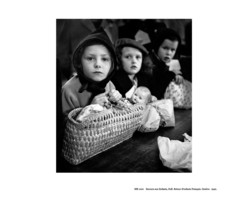
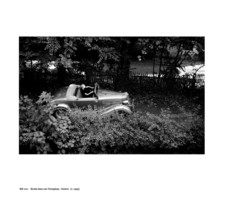
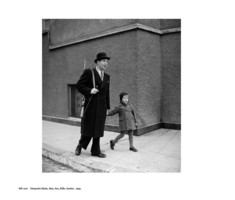
He was the first official photographer for the United Nations, photographed the League of Nations, the first World Jewish Congress, and the last World Zionist Congress before the outbreak of World War II. He was a freelance photojournalist during the War and he photographed Benito Mussolini’s death as well as the liberation of Paris. His work has been described as "having the humor, warmth and sensuality of Kertesz and is far more formal and design oriented than Doisneau." His work is “reminiscent of the work of fellow European photographers Robert Doisneau, Jacques Henri Lartigue, Andre Kertesz, and Henri Cartier-Bresson.The significance of Bolomet’s images resides not only in their historic value but in their sensitivity and humanity."
Bolomet first visited the United States in the early 1930s during the Depression and stayed with an uncle in Akron, Ohio who had been a Zeppelin engineer. He emigrated in the early 1950s, first to New York, but later to California. It was in California that he held his first exhibition, at Joseph Magnin Company, a specialty department store in San Francisco.
Bolomet later became a college instructor. He was professor of French and World History at USC and Caltech for the next 25 years until his retirement. In his 70s through to his 90s, he was a popular docent at the Getty Museum in Malibu. He passed away a couple of months before the retrospective exhibition that he had been working on with Robert Brecko Walker. It opened at the G. Ray Hawkins Gallery in Beverly Hills in 2003.
The Marcel Bolomet Archive, comprised of about 25 000 negatives was acquired in 2018 by the Fotostiftung Schweiz (Zürich, Winterthur) for their permanent collection. They exhibited a selection of his war photography in 2022. -
Exhibitions